

How to Choose the Right Duffel Bag for Travel
When it comes to travel, having the right luggage can make a world of difference. One versatile and reliable option to consider is a duffel bag. Duffel bags are known for their spaciousness, durability, and ease of use. However, with so many options available, choosing […]
Home & Garden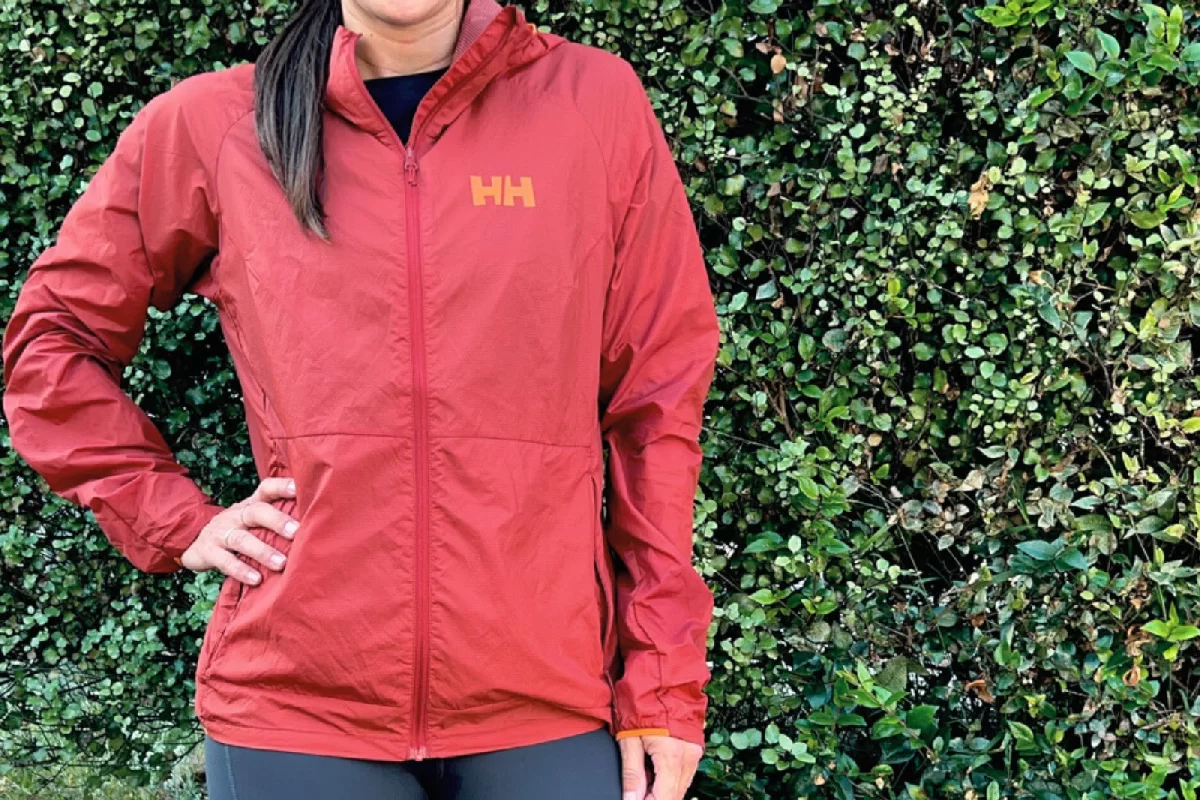
Helly Hansen Fall 2023 Apparel Review: Diving In
INTRO TO HELLY HANSEN’S FALL 2023 APPAREL COLLECTION SAM: I’ve spent vast swaths of my life, including the past 10 years, working or living in Maryland’s bayside capital, Annapolis. The city is squeezed onto the end of a peninsula between two main tributaries of the Chesapeake […]
Nutrition
Best Camping Gear of 2024: Enhancing Outdoor Adventures with Innovative Equipment
Introduction:Camping allows us to disconnect from the hustle and bustle of everyday life and immerse ourselves in nature’s beauty. To make the most of your camping experience, having the right gear is essential. In this blog post, we will explore the best camping gear of […]
Home & Garden
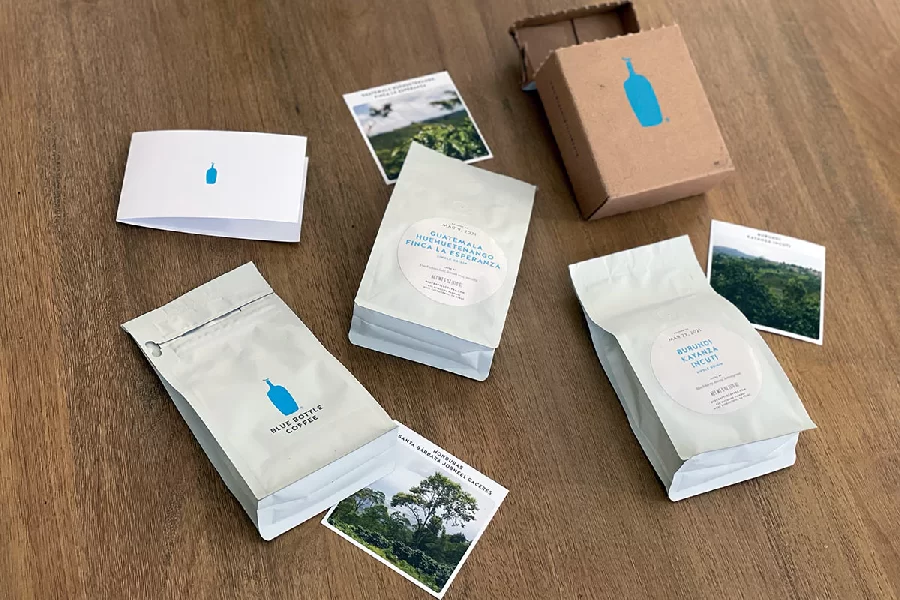
A Brew Above the Rest: Blue Bottle Coffee Review
Introduction:Blue Bottle Coffee has emerged as a prominent name in the specialty coffee industry, captivating coffee enthusiasts with its commitment to quality, sustainability, and exceptional flavor profiles. With a focus on sourcing the finest beans, precision brewing techniques, and a dedication to elevating the coffee […]
Health & Fitness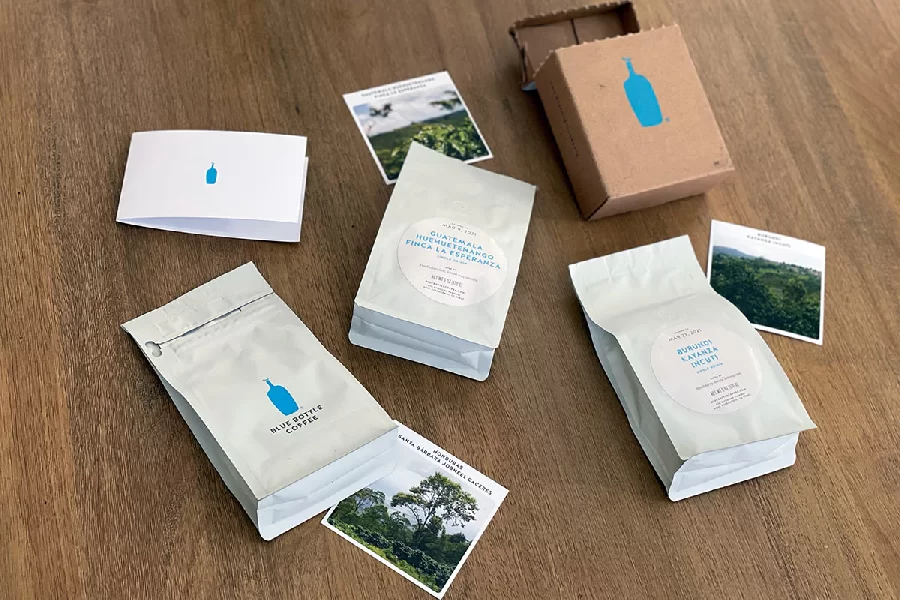
Introduction:
Blue Bottle Coffee has emerged as a prominent name in the specialty coffee industry, captivating coffee enthusiasts with its commitment to quality, sustainability, and exceptional flavor profiles. With a focus on sourcing the finest beans, precision brewing techniques, and a dedication to elevating the coffee experience, Blue Bottle Coffee has garnered a loyal following. In this comprehensive review, we explore the world of Blue Bottle Coffee, delving into its coffee offerings, brewing methods, customer experience, and overall value. Join us as we savor the rich aromas and discover what sets Blue Bottle Coffee apart as a purveyor of exceptional coffee.
Coffee Selection and Quality:
Blue Bottle Coffee prides itself on sourcing and roasting some of the most exquisite coffee beans from around the world. The company maintains direct relationships with farmers, ensuring fair trade practices and sustainable sourcing. From single-origin varieties to carefully crafted blends, Blue Bottle Coffee offers a diverse range of flavors to suit different preferences. Whether you prefer a bright and fruity Ethiopian Yirgacheffe or a rich and robust espresso blend, Blue Bottle Coffee delivers an unparalleled taste experience that showcases the unique characteristics of each bean.
Brewing Methods and Expertise:
Blue Bottle Coffee’s commitment to excellence extends beyond sourcing and roasting. The company places great emphasis on brewing methods to extract the full potential of their beans. From pour-over to espresso-based drinks, Blue Bottle Coffee’s baristas undergo extensive training to master the art of brewing. This expertise is evident in each cup, as the coffee is meticulously brewed to achieve optimal flavors. The attention to detail and dedication to precision brewing make Blue Bottle Coffee a standout player in the specialty coffee industry.
Cafe Experience and Atmosphere:
Blue Bottle Coffee’s cafes offer a welcoming and inviting atmosphere for coffee lovers to indulge in their favorite brews. The minimalist and modern design aesthetic creates a tranquil environment that encourages relaxation and enjoyment. The knowledgeable and friendly staff are passionate about coffee and are always ready to assist customers in choosing the perfect drink or answer any questions. The attention to detail extends to the cafe experience, as Blue Bottle Coffee strives to create a space where customers can truly appreciate the artistry behind each cup.
Sustainability and Ethical Practices:
Blue Bottle Coffee takes its commitment to sustainability seriously. The company actively seeks out environmentally friendly practices throughout its supply chain. From supporting farmers who utilize sustainable farming techniques to using compostable and biodegradable packaging, Blue Bottle Coffee strives to minimize its impact on the environment. Additionally, their dedication to fair trade practices ensures that farmers receive fair compensation for their hard work, contributing to the long-term viability of coffee-growing communities. By choosing Blue Bottle Coffee, customers can feel good about supporting a brand that prioritizes ethical and sustainable practices.
Subscription Service and Home Brewing:
Blue Bottle Coffee offers a convenient subscription service that allows customers to enjoy their favorite coffees delivered straight to their doorstep. With various subscription options, including personalized recommendations based on taste preferences, customers can explore a range of flavors and brewing methods from the comfort of their own homes. Blue Bottle Coffee provides brewing guides and tips, empowering coffee enthusiasts to replicate the exceptional taste and quality of their cafes in their own kitchens. The subscription service and commitment to home brewing bring the Blue Bottle Coffee experience directly to coffee lovers’ homes.
Value for Money:
While Blue Bottle Coffee is positioned as a premium coffee brand, the value for money is evident in the superior quality and taste of their products. The meticulous sourcing, expert brewing, and commitment to sustainability justify the price point. Additionally, the subscription service offers flexibility and convenience, allowing customers to tailor their orders to their preferences. For those seeking an elevated coffee experience that goes beyond the ordinary, Blue Bottle Coffee offers exceptional value.
Conclusion:
Blue Bottle Coffee stands out as a beacon of excellence in the specialty coffee industry, delivering an extraordinary coffee experience that combines quality, sustainability, and exceptional flavors. From sourcing the finest beans to employing precise brewing techniques, Blue Bottle Coffee showcases its dedication to the craft in every cup. The inviting cafe atmosphere, commitment to sustainability, and convenient subscription service further enhance the overall experience. While positioned as a premium brand, the value for money is undeniable, making Blue Bottle Coffee a top choice for coffee aficionados who appreciate the art of exceptional coffee.
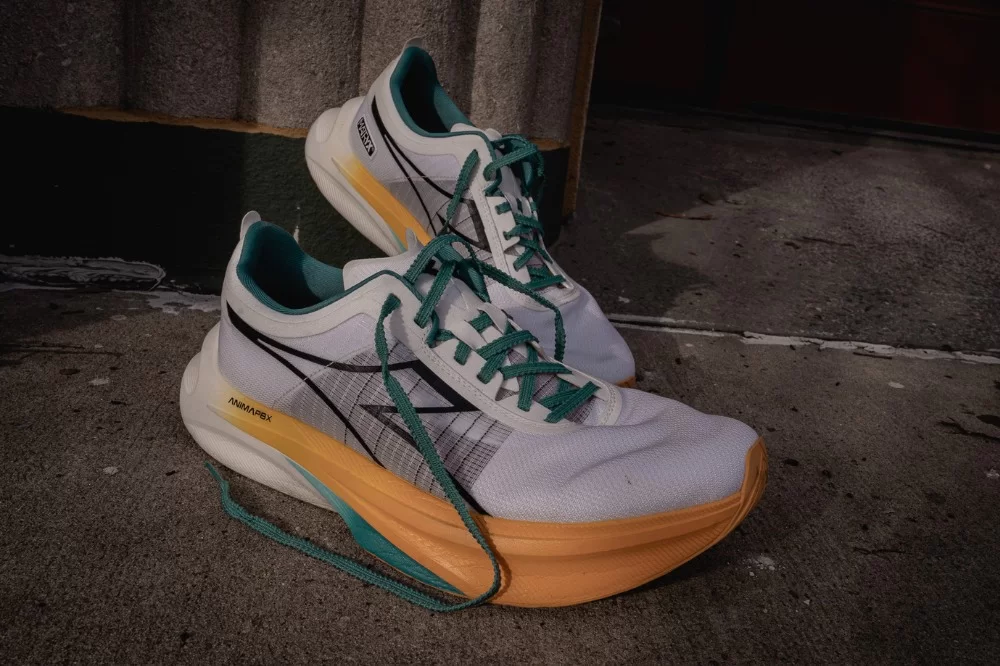
Diadora Gara Carbon Review: Italian Stallion, For Real
INTRODUCTION TO THE DIADORA GARA CARBON ROBBE: Diadora was born in Italia, and continues to run the family-owned business at the foot of the Dolomites, home to some of the world’s most iconic designers. It should be no surprise that at their core lies an […]
NutritionINTRODUCTION TO THE DIADORA GARA CARBON
ROBBE: Diadora was born in Italia, and continues to run the family-owned business at the foot of the Dolomites, home to some of the world’s most iconic designers. It should be no surprise that at their core lies an attention to detail and a commitment to design and innovation at an intentional pace. And while almost every brand uses production facilities in China or southeast Asia for their footwear production, in recent years, Diadora has moved some of its product line back to its Italian factory, using its own Italian craftsmanship from workers who have been with the company for decades. (We’re specifically talking about the Diadora Atomo v7000, one of our favorite convertible running/lifestyle shoes, which is on my feet as I type out this review.)
That said, the Diadora Gara Carbon is not one of those shoes. It is made in China. But so is the Nike Alphafly 3. And Saucony Endorphin Pro 4. And pretty much every other race day shoe. Point being, the “Made in Italy” thing is great from a storytelling aspect, but in 2024, you’re going to get a pretty damn good product wherever it’s made.
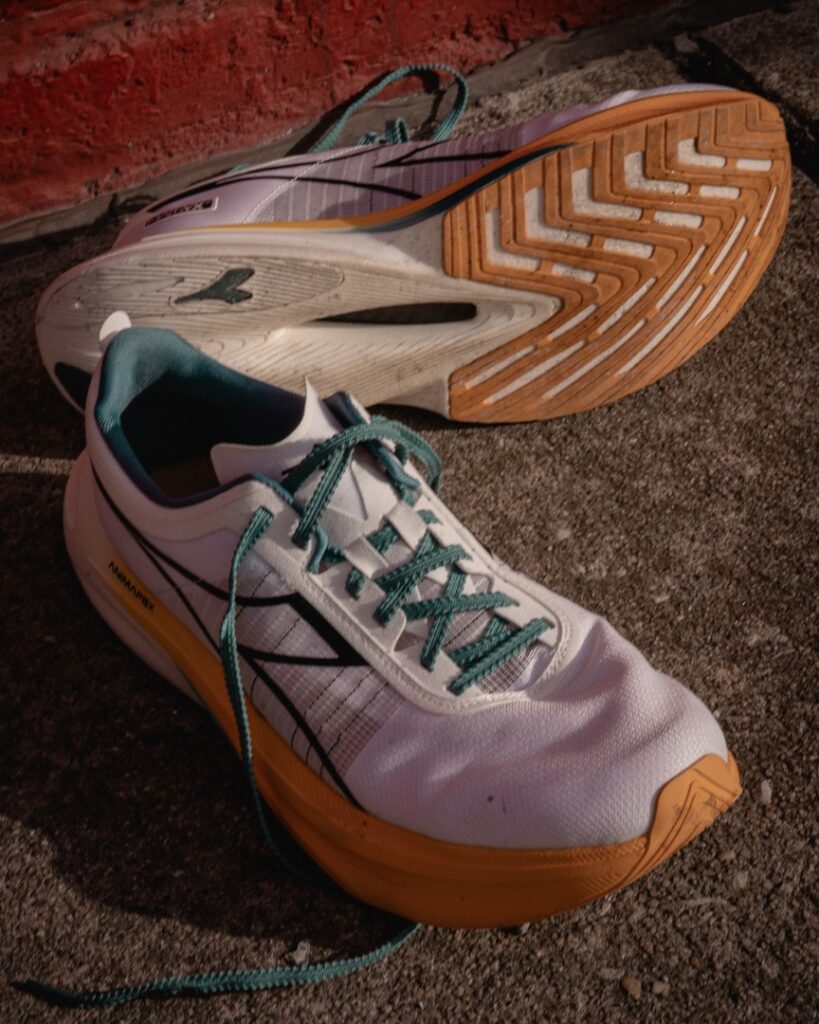
Race-style laces
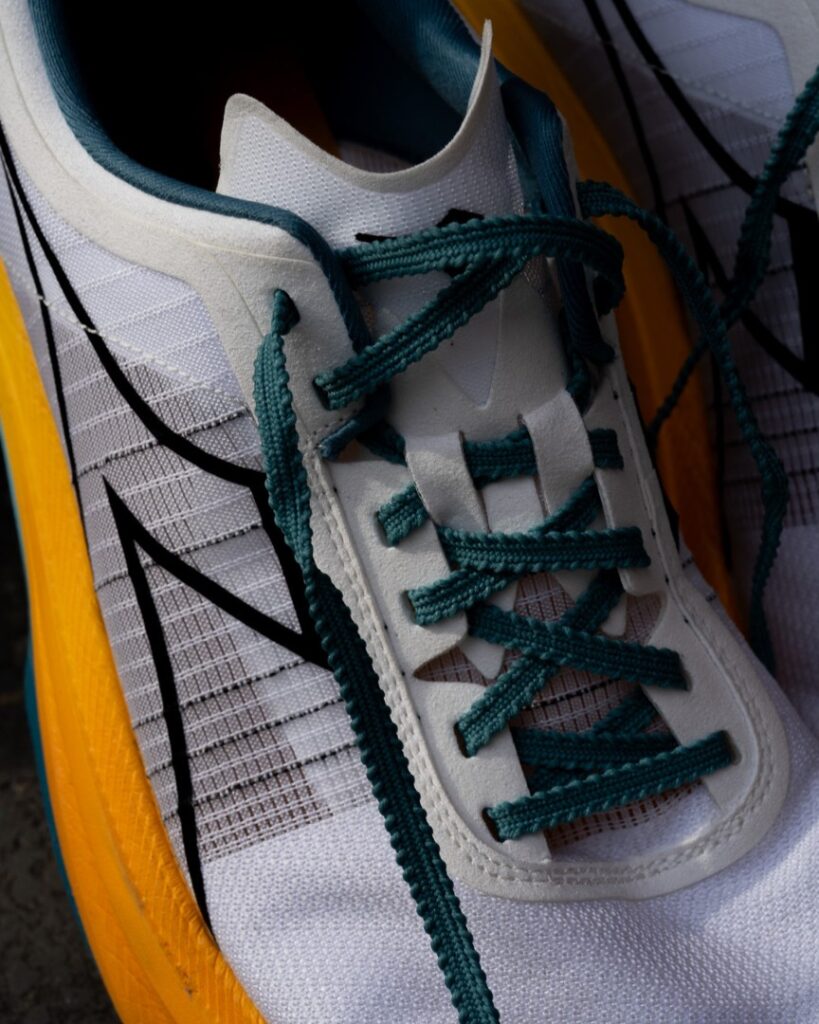
Matryx upper
Speaking of 2024, at this point in time we’re a good half-decade into the super shoe boom, and just about every brand that has a balance sheet has a carbon-plated race day shoe. Hell, Austin-based Atreyu has about two employees and an office dog as their full-time staff, and even they have a race day shoe (The Race Model).
And yet somehow, despite the fact that they live in the land of Lambos, Diadora has never had a real race day shoe. Which is why we were skeptical about the Gara Carbon when we first saw it at The Running Event this past December. Don’t get me wrong– once we held it hand, we were quite interested.
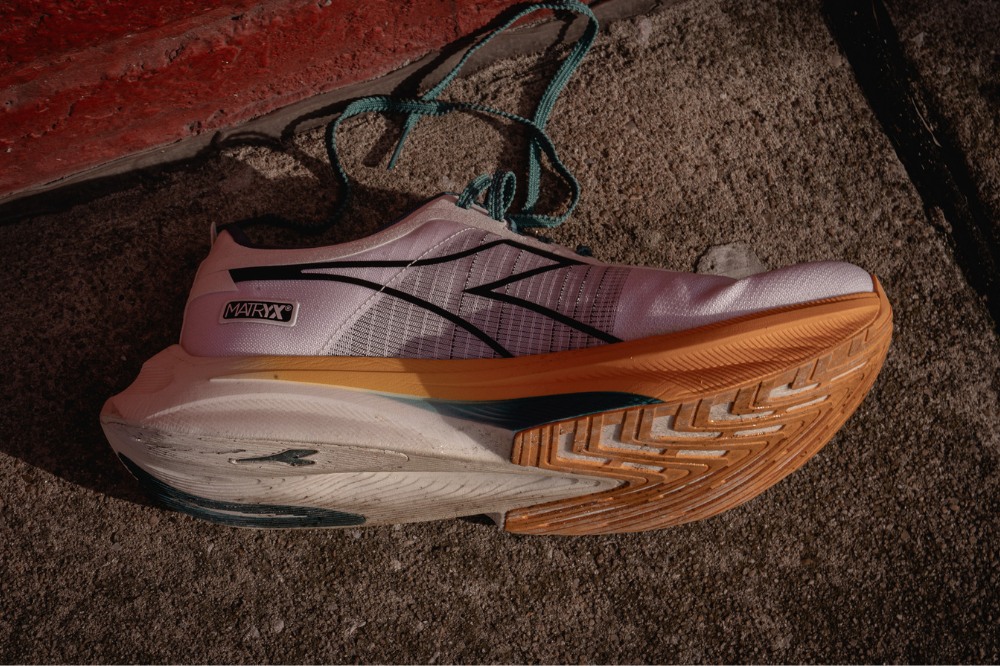
The shoe is very light, coming in at over an ounce lighter than competitors like the Saucony Endorphin Pro 4. It has a legit Pebax SCF midsole (what they call Anima PBX) and its carbon fiber plate was sourced from the same factory used by Ducati motorcycles. A premium Matryx upper (known for its durability and breathability properties) wraps the foot, while tooth-style race laces finish off the package. Lastly, of course– it looks incredible.
That’s a lot of good things in one race day package. But when it’s thrown into fifth gear, how does it handle? Let’s find out.
CARYN: Before I ever considered running as an activity folks did for fun, I was purely a ball sports athlete. I was pretty quick, but I was only running if some kind of game was involved. If someone had told 13-year old me one day I’d be running 70 miles a week for fun… well, let’s just say there would have been a pretty prolific eye roll. I was also, by definition, a pool rat throughout my summers growing up – dropped off at 8 am and picked up after dinner. Every day was tennis camp and two swim team practices with trips to the snack bar for snowballs, Fun-Dip, and grilled cheese peppered in.
I’d imagine right about now you’re wondering why any of this is relevant to the Diadora Gara Carbon, the shoe we’re all here to chat about today. If you must know, It was during tennis camp that I was first exposed to the immaculate vibes of DIadora. All of the coolest, nicest camp instructors had on Diadora tennis shoes. The vintage, classic look and beautiful color combinations stood out from anywhere on the court. While I never quite reached Borg status (and therefore, never needed the special shoes), I’m thrilled to be able to test a bit of Diadora in the running space with their first plated racing shoe, the Gara Carbon.
SAM: I’m about to nerd out so please bear with me. Gaara is one of my favorite characters in all of television, let alone the Naruto series. He starts off as a villain during the Chunin exams, a cynical, powerful, yet misunderstood and insecure ninja. After being defeated by Naruto he begins one of the best character transformations I know of. In Naruto Shippuden he is even more powerful and has lost his cynical and insecure nature to embrace his leadership potential and the value of friendship
While the Diadora Gara Carbon is related to Naruto’s character through name only, (Gara roughly translates to race or competition in Italian), the path of Diadora’s running shoes feels similar to the Jinchuriki of the Hidden Village of the Sand. Mainly known in the States for tennis, cycling, or football boots (soccer cleats), Diadora has made a concerted push into the US running shoe market over the last half decade. So far it has felt misunderstood and misrepresented, with good-looking and reliable shoes, but nothing to speak of as far as high performance footwear. I am pleased to say that has changed with the Gara Carbon. Let’s talk about why.
WHAT WE LIKE ABOUT THE DIADORA GARA CARBON
ROBBE: I already told you how good it looks, and everyone else who’s seen it tells us how good it looks. The design is among the best for race day shoes. If you have eyes with adequate vision, you know what we’re talking about. If you’re blind, just trust us on this one.
I think this is the first time I’ve seen a Matryx upper used on a race day shoe, though we’ve seen their premium materials used in a variety of shoes on the trail side, namely the Hoka Tecton X 2, Hoka EVO Speedgoat (R.I.P.), and the Nnormal Kjerag. The difference in Matryx uppers is that they’re super light and ultra breathable. In contrast to fully coated textiles that are typically used in uppers, each yarn in a Matryx upper is coated individually. In this way, your feet breathe and stay dry while perspiration drains away. It’s also highly abrasion resistant without sacrificing comfort. Simply put, this upper will outlast the rest of the shoe, no question about it.
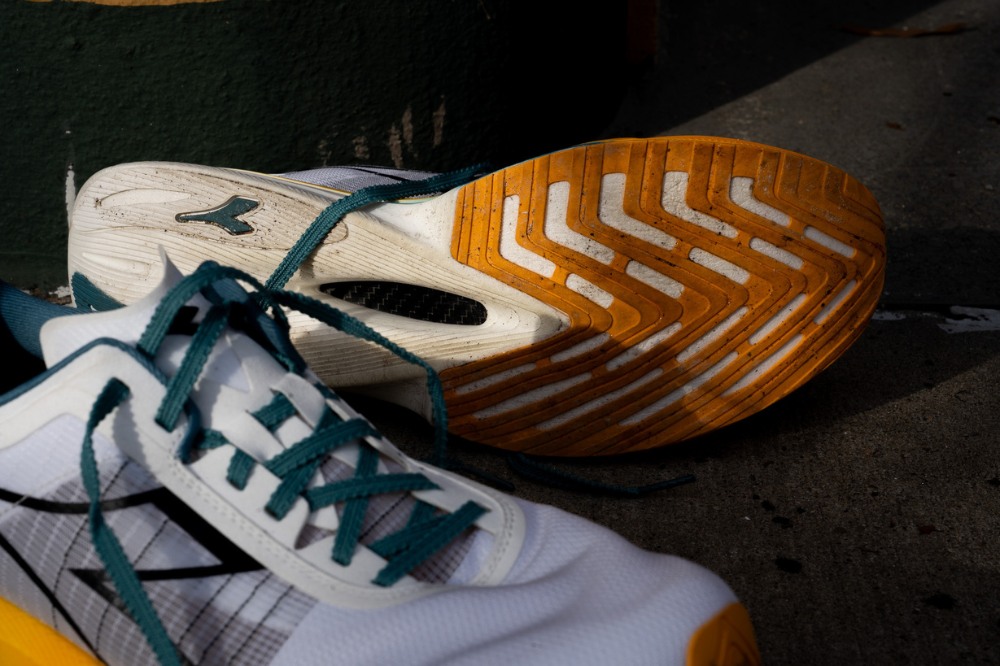
I found all of Matryx qualities to be true with the Gara Carbon. The lockdown and fit is superb, with the upper full wrapping the foot securely. The tongue is not gusseted, but with a dual lace hold in the middle and a perfectly flat lay, I had no issues with movement. Also, unlike some race day shoes, the tongue doesn’t ride up on the front of the ankle. There’s also a surprising amount of padding around the collar, which is rare to find in a lightweight race day shoe. And thank you, Diadora, for just using the standard race day tooth-style laces that we know and love.
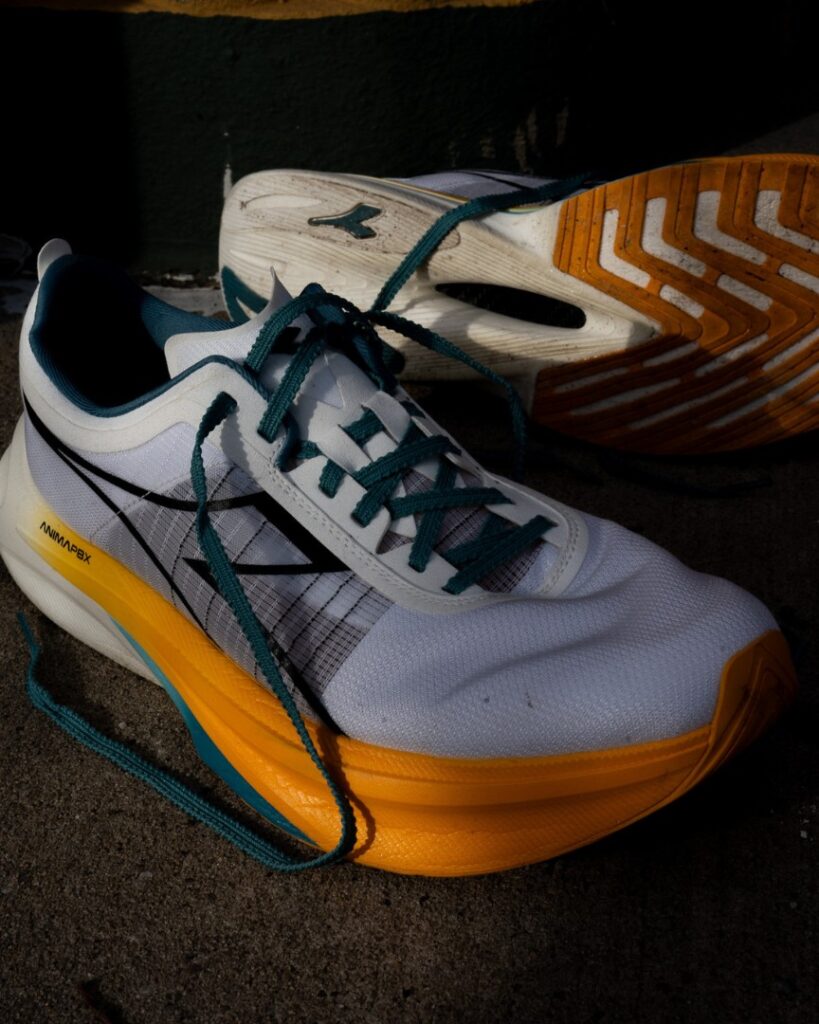
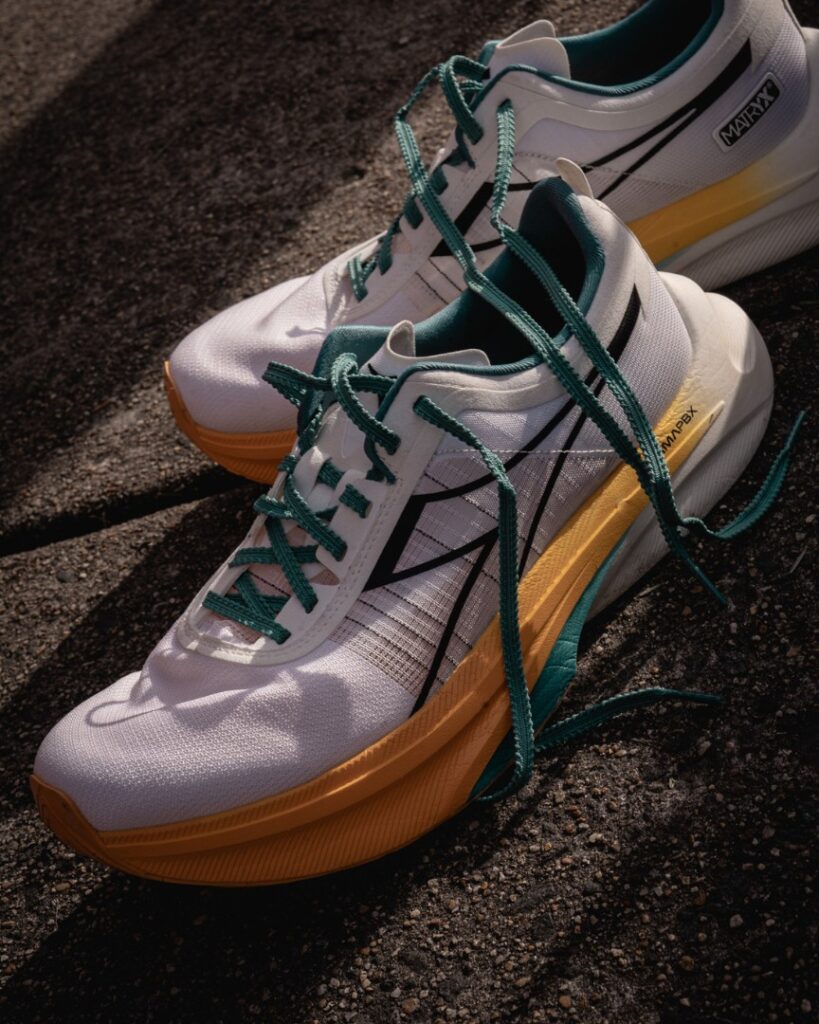
On the run, the Anima PBX midsole acts exactly as you think it would. It’s bouncy, it’s super comfortable, it feels light and fast. It’s a race day shoe, for sure, and easily stacks up with the top-tier options out there. I did a couple hill workouts in the shoe and in both situations I was pretty surprised at my paces. Like, trust me when I say I’m not in that good of shape. The Pebax and carbon plate combo work exactly as they’re supposed to, giving you that pep you want on race day. The shoe handled it all and worked equally as well at slower paces.
For the height of the stack of Pebax in the shoe, it’s also surprisingly stable. Meaning, I felt pretty comfortable running in the shoe, no matter the pace. It’s not an aggressive shoe that keeps you on your toes, like, say, the Asics Metaspeed, Hoka Rocket X 2 or Cielo X1, or Nike Alphafly 3. Instead, it’s more comparable to a much better version of the New Balance SC Elite v3 (the upper alone merits that distinction) or a lighter Saucony Endorphin Pro 4.
However, if you like the balance between comfort, bounce, and performance, then this has to be one of the best options– if not the best– out there.
Trust me when I say that Diadora is putting their name on the map with this shoe.
CARYN: My prior experience with Diadora running shoes is actually pretty limited. Most of the shoes I’ve tried on and seen had a phenomenal aesthetic, but lacked the performance piece needed to make a mark on the industry. When this shoe arrived, I loved the yellow (marigold?), blue and white colorway – classic Diadora with a little spice. I can’t say I usually gravitate toward a shoe with any amount of yellow in the colorway, but Diadora somehow elevated the banana look.
Taking the shoe out of the box, my first thought was that it felt nice and light. A UK size 9 weighs in at 8.1 oz, which puts the Gara Carbon in line with other similar race-day shoes. I took the shoe out for a tempo run, and immediately noticed the pep. The Gara Carbon has a full-length carbon fiber plate and Diadora’s new Anima PBX, which Diadora calls a “special, supercritical foam” (read: their formulation of Pebax) that claims to increase midsole responsiveness by 55% while reducing its weight by 40%
The combination provides a delightfully bouncy, fun ride that makes picking up the pace downright easy. After a few runs, I found the Gara Carbon was reminiscent of the original Nike Zoom Vaporfly 4% – that similar soft, trampoline-like feel without a rocker or aggressive toe-off. I didn’t have issues with lockdown on the run, but do think the Gara Carbon probably lands mid-pack when it comes to overall stability just due to the lack of structure to the upper and sidewalls.
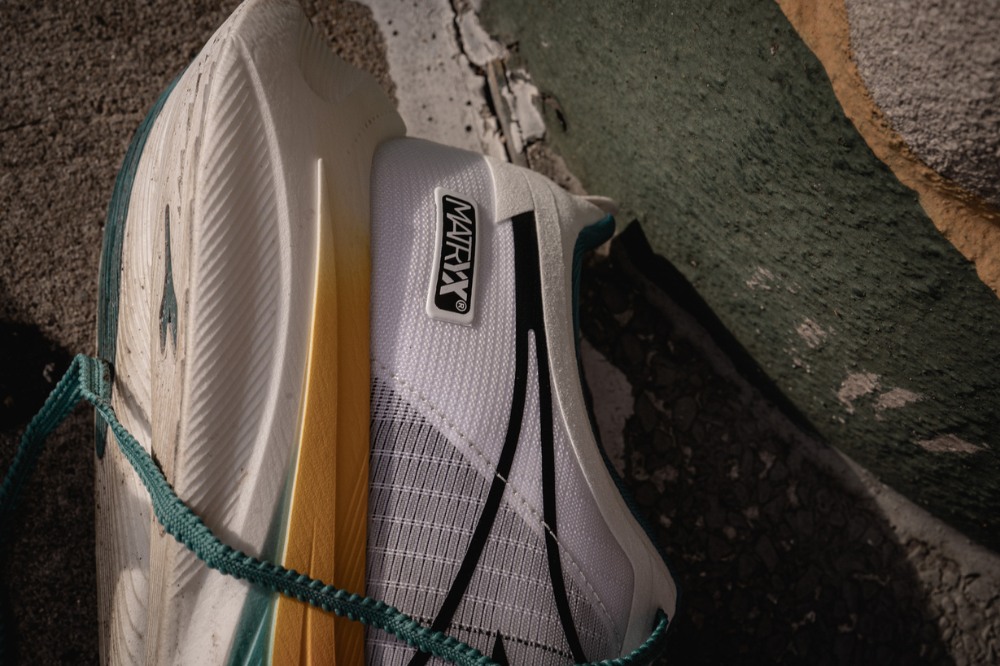
SAM: I’ll get straight to it – absolutely love this shoe. Full stop. The Diadora Gara Carbon is exactly what comes to mind when I think of what I want in a long distance racing shoe. There’s a few reasons why.
First of all, the midsole in this shoe rocks. You have a big slab of Anima PBX, which is their new supercritical Pebax-style compound. I’m not sure about how much stack height is in the shoe but it’s somewhere in the mid-to-high 30 mm range. On top of it is their carbon fiber plate which has no bells and whistles and is there to compliment their midsole, and it does so perfectly. The midsole is responsive, soft, and bouncy.
Occasionally I find newer racing shoes can get slightly too soft with their midsole and can lose responsiveness over the course of a run or race, but I never felt that issue with the Gara. I used it for workouts ranging from 1-mile repeats to long run efforts and found it absolutely dialed in for everything. It is the type of shoe that disappears as you are running in it and lets you focus on running faster and farther, and that is exactly what I look for in a racer.
Something that also impressed me with this shoe is how smooth it is through the stride. I was surprised when writing this review to find out that this shoe has a 5 mm drop. I have flatter arches and if you have read my stability reviews you would know that I am not always a fan of lower drop shoes. But in this case I loved it.
The Gara is built with a design that pushes your foot forward as you are running. The heel of the midsole extends beyond the heel of the upper; combine that with the carbon plate and the wide forefoot and you get a shoe that has a quick and smooth transition for keeping your stride going during fast runs. Everything about this shoe is fun, fast, and efficient. It is designed to get you moving and get out of the way, and all of the features marry together to do that.
WHAT WE DON’T LIKE ABOUT THE DIADORA GARA CARBON
ROBBE: There is just a tiny bit of what seems to be extra fabric in the toe box. I only noticed it when I first laced them up, and on the run it truly didn’t matter. In fact, I kind of liked a bit of extra room, considering the rest of the lockdown was right on point. With other race day shoes that have questionable heel lock down (Vaporfly or Adios Pro), you for sure need to be locked in throughout the midfoot and toe box. On this shoe, I think there’s a little leeway and I had no issues. But I just wanted to make note of it.
I do think the Pebax is on the softer side in this shoe. That’s not a bad thing, it’s more of a preferential thing. It’s not so soft that you just sink into it and don’t come out alive, but if you love to feel the plate and the aggressiveness of other race day shoes with rockers (Hoka Rocket X 2, Asics Metaspeed Edge+, Salomon S/Lab Phantasm 2), then you may want to look elsewhere.
Yes, the price is $300, which makes this the most expensive race day shoe currently available. And no, it’s not even made in Italy. Again, keep in mind that Diadora did hand-select the most premium ingredients in shoe manufacturing and put them all into its dream shoe. There’s some justification there.
CARYN: This shoe really surprised me, so the bad is far more limited than I expected. That being said, I tend to gravitate toward racing shoes with more of a rocker or more aggressive toe off. This shoe has neither, but seeing as this is a personal preference, it’s not really negative – just something to note.
I liked the overall volume in the toe box, but because the upper lacks structure, it does wrinkle a bit. I’m all for lightweight, but I think Diadora sacrificed the integrity of the upper a bit to trim the shoe down. But truly, the most obvious flag on the field is the price. At $300, it seems steep for a company that’s really just entering this part of the shoe market. I know that Diadora tends to put a premium on their style, but this seems a bit egregious.

SAM: The only real con for me is the lacing on this shoe. Like I said earlier, everything about this shoe feels designed to push you forward, and the laces are no exception. There is no double eyelet and the last eyelet felt somewhat far away from my ankle. The first workout I did in them I could feel the shoe slipping when I was turning, and ended up unlacing the shoe to use the last two eyelets for the classic runners loop. This gave me better heel lock and on my second workout in these shoes I had no slippage problems.
The other less substantial con is that this shoe is $300. Three. Hundred. Dollars. We’re starting to get a bit ridiculous with these prices. This is a great shoe, for sure, but it doesn’t blow me away to the point where I could justify spending $300 on it. That just does not make dollars and sense.
FINAL THOUGHTS ON THE DIADORA GARA CARBON
ROBBE: Trust me when I say I’m as shocked as you that Diadora just dropped what may be one of the best race day shoes of 2024. Not to say I didn’t love some of their shoes before on a personal level; I just never put them in the top tier of performance when it came to race day. I don’t think anybody would have. That’s changed with the Gara Carbon.
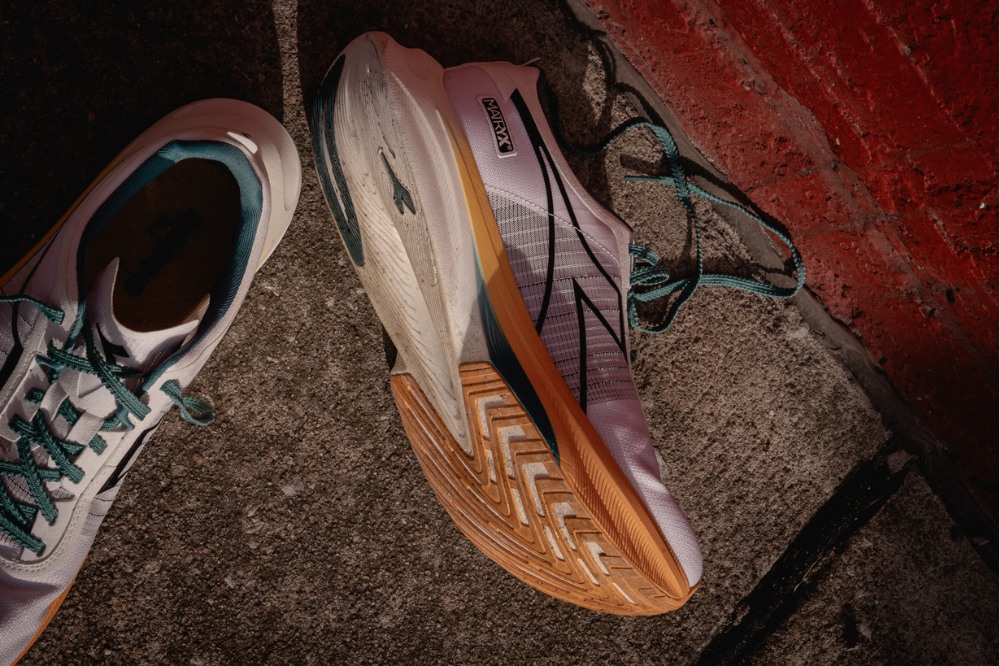
The combination of the Matryx upper, Anima PBX midsole, carbon fiber plate, and overall light weight of the shoe make this a race day contender with performance bonafides that match its elegant design. They went all-in on premium performance and ended up with a shoe that deserves to be talked about, both for its Italian-inspired heritage and its forward-focused approach to going fast.
CARYN: Diadora coming in hot with a heavy hitter! I never anticipated liking this shoe so much, but had hope that this time, the performance might line up with the aesthetics a bit more. Thanks to a springy, lightweight ride and great fit, this shoe can certainly hold its own against most, if not all, of the currently available plated options for race day. This guy will certainly have a happy home in my workout day shoe rotation for as long as possible.
SAM: Like Naruto’s Gara in the Fourth Great Shinobi War, the Diadora Gara Carbon is here and ready to make its mark as a fast and comfortable race day option. While I personally cannot justify the price tag, this is a top of the line racing shoe which will melt away the miles after you figure out how to get it laced up. It’s positive to see that the racing shoe arms race is pushing every company to nominate their champion. Hopefully we will get to the point where prices will decrease because of the sheer amount of options available. But if you’re up for dropping the cash, the Gara Carbon will not disappoint.
You can pick up the Diadora Gara Carbon for $300
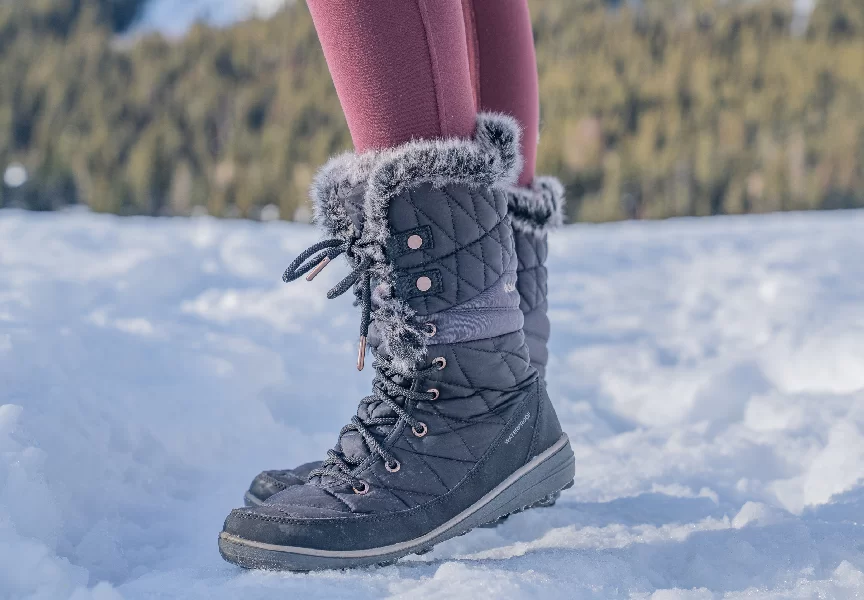
How to Choose Winter Boots for Women
Introduction:When winter arrives, finding the perfect pair of boots becomes essential for women to stay warm, comfortable, and stylish in cold and snowy conditions. However, with a wide range of options available, choosing the right winter boots can be overwhelming. In this blog post, we […]
Home & Garden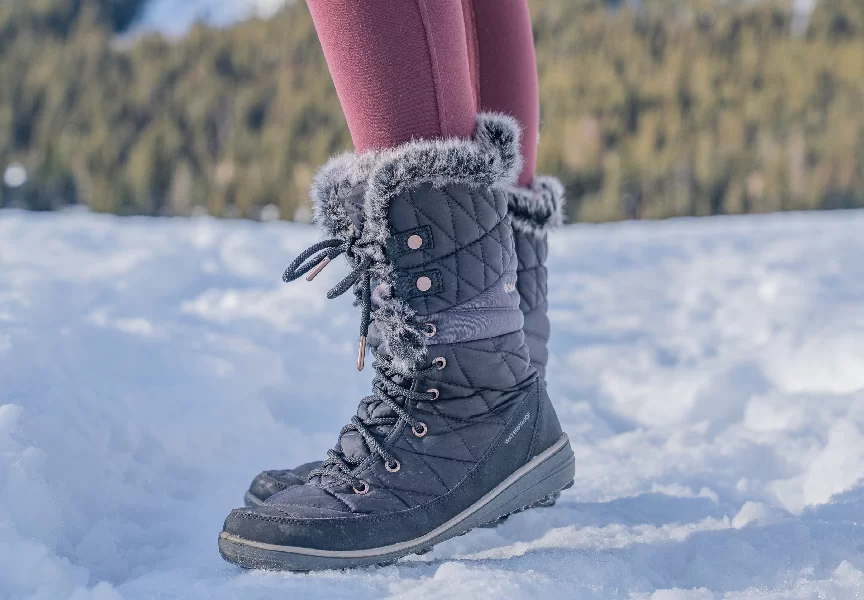
Introduction:
When winter arrives, finding the perfect pair of boots becomes essential for women to stay warm, comfortable, and stylish in cold and snowy conditions. However, with a wide range of options available, choosing the right winter boots can be overwhelming. In this blog post, we will guide you through the key factors to consider when selecting winter boots for women, ensuring you find the ideal combination of warmth, durability, and style to conquer the winter season with confidence.
- Insulation:
One of the most critical factors when choosing winter boots is insulation. Look for boots with proper insulation to keep your feet warm in cold temperatures. Common insulation materials include Thinsulate, fleece, or shearling lining. These materials provide excellent insulation while maintaining breathability. Choose insulation levels based on your climate and intended use. Warmer boots are suitable for extremely cold conditions, while lighter insulation may be appropriate for milder winters. - Waterproofing:
Winter often brings snow, slush, and wet conditions. It’s crucial to choose boots that offer waterproof or water-resistant properties to keep your feet dry. Look for boots made with waterproof materials like Gore-Tex or treated leather. Seam-sealed construction also enhances waterproofing. Waterproof boots ensure your feet stay dry, preventing discomfort and potential health issues. - Traction and Grip:
Walking on icy and slippery surfaces is a common challenge during winter. To avoid slips and falls, prioritize boots with excellent traction and grip. Look for boots with rubber soles featuring deep treads or lugs. This design provides a secure grip on various surfaces, including snow, ice, and wet pavements. Boots with an anti-slip outsole or traction-enhancing technologies like Vibram can significantly improve stability and safety. - Height and Coverage:
Consider the height and coverage of the boots based on the conditions you’ll be facing. Higher boots offer better protection against snow, slush, and cold air, keeping your feet and lower legs warm. Look for boots that extend above the ankle or even mid-calf for added coverage. Additionally, consider boots with adjustable features such as laces or buckles to ensure a snug fit and prevent snow from entering the boots. - Warmth-to-Weight Ratio:
Finding a balance between warmth and weight is crucial for optimal comfort. Look for boots that provide sufficient insulation without being overly heavy or bulky. Advanced insulation materials like Thinsulate offer excellent warmth-to-weight ratio, providing insulation without adding unnecessary bulk to the boots. Lightweight boots allow for easier movement and prevent fatigue during long walks or outdoor activities. - Boot Construction:
The construction of winter boots affects their durability and overall performance. Look for boots with sturdy construction and reinforced seams. Double or triple stitching enhances durability and longevity. Consider boots with a supportive shank or midsole for added stability and arch support. A well-constructed boot will withstand the rigors of winter and provide long-lasting comfort. - Style and Versatility:
While functionality is important, style and versatility also play a role in choosing the right winter boots. Look for boots that align with your personal style and can be easily paired with various outfits. Classic designs and neutral colors offer versatility and ensure your boots remain in style for years to come. Additionally, consider features like removable liners or faux fur detailing that allow for customization and adaptability to different weather conditions. - Fit and Comfort:
Choosing winter boots with the right fit is crucial for maximum comfort. Consider the width, arch support, and toe box space to ensure a comfortable fit for your feet. Boots should provide enough room for thick socks or additional layering without feeling too tight or constricting. Look for boots with cushioned insoles or removable footbeds for added comfort and the option to replace them if necessary. - Brand Reputation and Reviews:
Research reputable brands that are known for their quality winter boots. Consider brands that have a reputation for durability, comfort, and performance in cold weather conditions. Read customer reviews to gain insights into the boots’ fit, warmth, and overall satisfaction. Pay attention to feedback regarding sizing, as some brands may have variations. A reliable brand often provides detailed information about their products’ features, materials, and technologies, helping you make an informed decision.
Conclusion:
Choosing the right winter boots for women requires careful consideration of factors such as insulation, waterproofing, traction, height and coverage, warmth-to-weight ratio, boot construction, style and versatility, fit and comfort, as well as brand reputation and reviews. By evaluating these factors and aligning them with your specific needs, you can find winter boots that keep your feet warm, dry, and comfortable while complementing your personal style. Invest in high-quality boots that will withstand the winter elements and provide reliable performance season after season.

Culinary Sorcery: Unleashing the Magic of Modern Cuisine
In a world increasingly recognizing the profound artistry of gastronomy, the culinary landscape is undergoing a remarkable transformation. The once-simple act of sustenance has evolved into a complex interplay of flavors, textures, and cultural traditions. This transformation is evident in the burgeoning interest in artisanal […]
Home & Garden
Rabbit Spring 2024 Trail Apparel Review: Pockets Galore
INTRODUCTION TO THE RABBIT SPRING 2024 TRAIL COLLECTION JOHN: My running clothes stink. They literally smell from years of abuse and torture. I’m absolutely grateful to be on this review because I need to toss out all my clothes that have been on too many adventures. […]
NutritionINTRODUCTION TO THE RABBIT SPRING 2024 TRAIL COLLECTION
JOHN: My running clothes stink. They literally smell from years of abuse and torture. I’m absolutely grateful to be on this review because I need to toss out all my clothes that have been on too many adventures. Also, I’ve never reviewed high-end trail running clothes, so this is very exciting! Like many confused, lost, and poor souls out there, I don’t prioritize new running clothes. I just hope my girlfriend, Mom, or the Easter Bunny gets me some, and I use all my resources on bibs, tech, and shoes. I want to change, but I can’t beat it! I’m trying!
So, for people like me holding on to gear out of love, saving cash, or memories, the question is why? Why would we get rid of our beloved, precious, but disgusting running gear? Well, let me tell you that since I received this fresh Rabbit Trail gear, I’ve been pretty much living in it exclusively (to test it out, of course). For me, to fully embrace new running gear is like what Garth said in Wayne’s World: “It’s like a new pair of underwear; at first, they’re restrictive, but then after a while, they become a part of you.”
I feel like rabbits don’t get enough love in the animal kingdom. They’re ferocious in Monty Python; Roger Rabbit somehow married Jessica, and they can be super diabolical, like in Donnie Darko and Silent Hill. I’ve been lucky enough to get Rabbit clothes here and there over the years, and I know they’re good, but I really had no idea what the newer gear brought to the table in terms of functionality. The gear also looks really cool, so like after the race or social run you won’t feel like a total dork in your 2017 5k shirt that’s permanently stained and stanky. Can Rabbit help me change my dirtbag ways? Let’s find out.
MELISSA: Local brand? Check. Woman founded and owned? Check. Quality product? Check! Not only is Rabbit a brand that I know well as a Santa Barbara local, but it’s one that has never disappointed me. I mean, I have tops and shorts that are still going strong nearly 10 years after purchasing them. I’ve mentioned in other reviews how much of a fan of their EZ apparel I am. There’s rarely a day that you’ll not see me wearing at least one item from that line. Well, in more recent years, Rabbit has expanded its focus and thrown its hat in the trail ring, and the result has been pretty impressive. Let’s explore why.

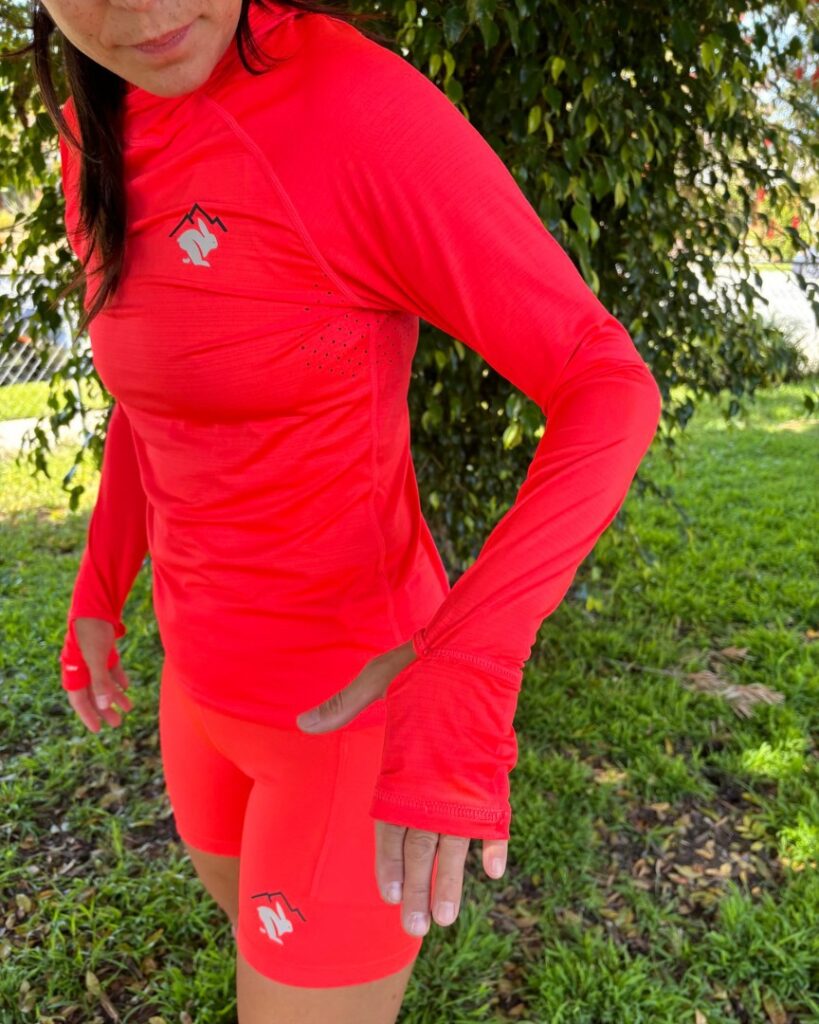
RABBIT UPF DEFLECTOR 2.0
JOHN: This lightweight UPF Deflector is packed with goodies, almost to the point that it spoils you.
It’s vented and has thumb holes and an opening to see your watch… on both sides! No pulling up your sleeve to see you drifted to a 13-minute pace! I know it’s simple but mind-blowingly awesome to me. The hoody has a UPF Rating of 50, and the hood itself has a brim and design that gives you additional protection from the sun for your face, neck, and ears. The cuffs cover your hands, giving you additional protection from the sun.
There’s also a zippered pocket in the back of the hoody to stash stuff. This hoody actually may be too good to be true because its features already have my girlfriend eying it for a quick snack and grab… beware the snatchers on this one, folks!
MELISSA: The UPF Deflector holds some sentimental value for me. I wore the original version of this long-sleeve top to Javelina 100 in 2021, my first 100 miler post-hip surgery. So this race and this top give me all the warm and fuzzy feels. For those not familiar with Javelina, it takes place in the Arizona desert. It’s completely exposed and has the potential to heat up. I had originally planned to wear the top only through the hotter, sunny parts of the day but ultimately ended up keeping it on for the entirety of the race because it transitioned easily from sun protection to an extra layer for warmth for the evening.
Version 2.0 has some pretty major updates. The UPF 50 material has shifted to something that is softer and stretchier. The watch openings in both sleeves, perforations around the armpit for ventilation, and zippered side pocket are also an addition to version 2.0. Finally, the top is offered in a Fiery Coral for women and Woodland Gray for men.
I can really appreciate the added stretchiness to this top. It makes it easier for it to be worn over something else. It also makes for easier movement and less rubbing, and we all know that rubbing eventually leads to chafing. Based on a couple of wears, I feel pretty confident in its ability to breathe and ventilate. Like version one, this top has sleeve extensions to help protect the hands and a generously sized hood that protects your neck and ears and sits well over a hat.
Overall, I think this is a wonderfully designed sun top that will come in handy as I train through the summer. It’s perfect for summiting peaks and for running in the desert, both of which I’m planning on doing this year, so don’t be surprised when you see me rocking bright coral out there.
PRICE: $70
RABBIT SHREDDERS AND SMASHEMS 5-INCH SHORTS
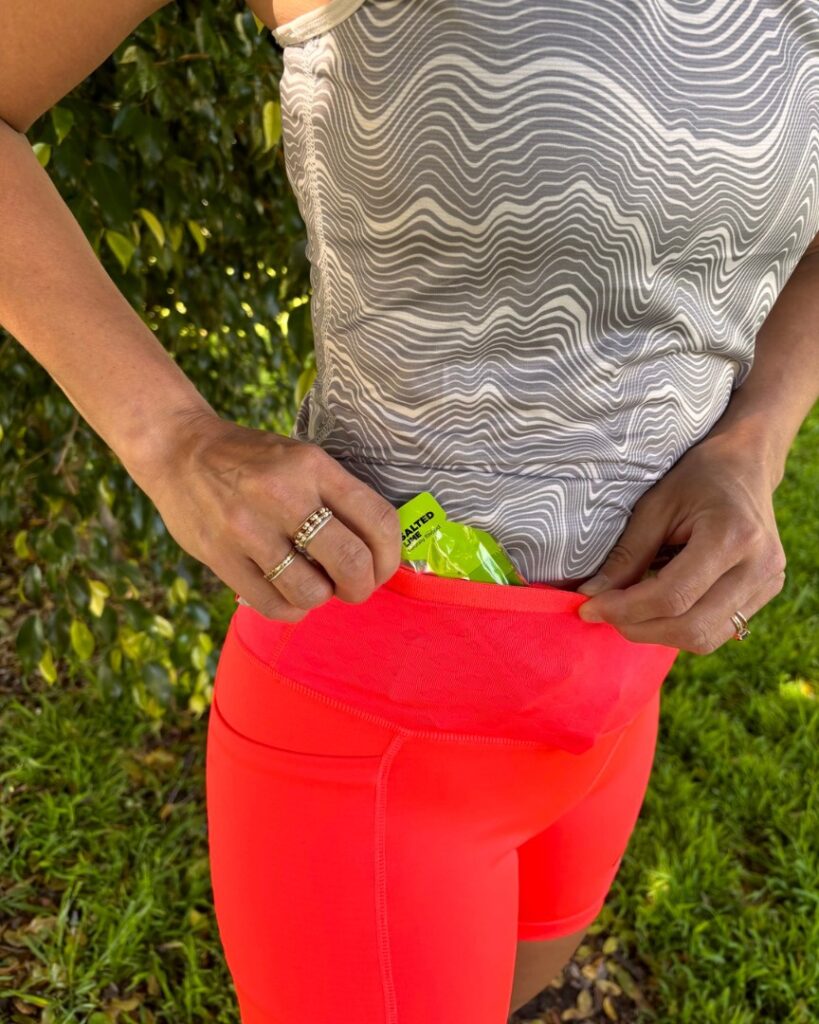
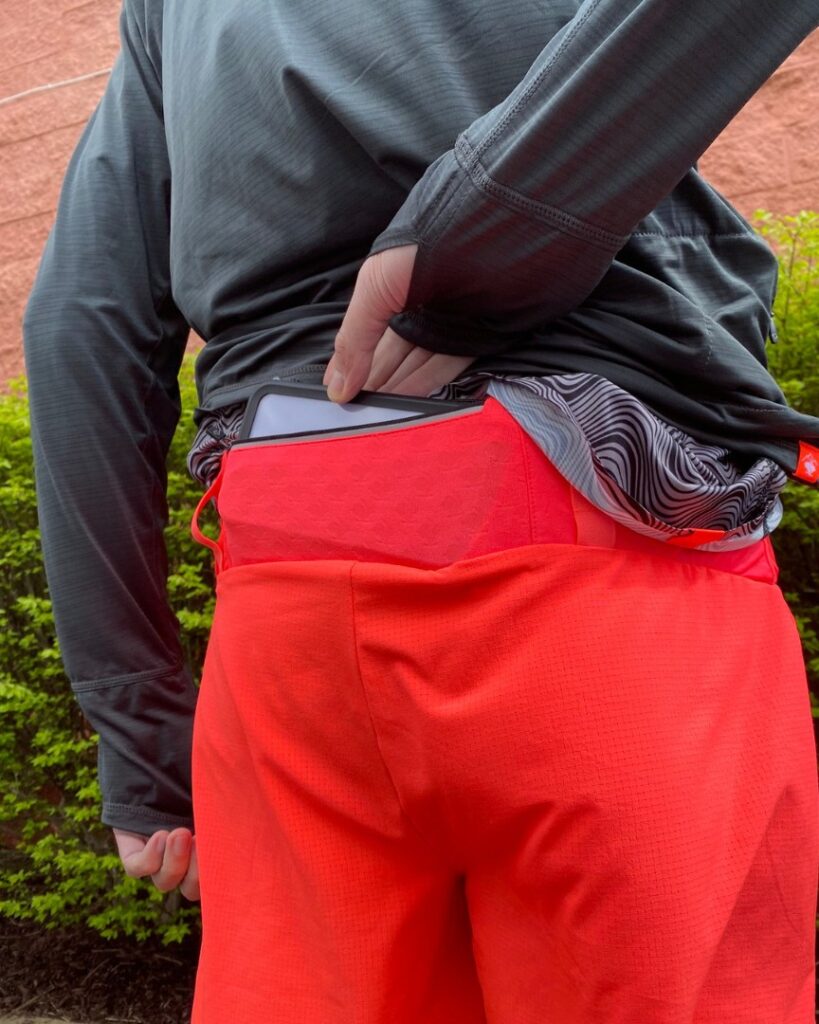
JOHN: The Shedders 5-inch shorts basically have a built-in running belt that stashes lots of stuff with four pockets. Another amazingly cool feature is that there are two elastic loops to hold trekking poles. I can’t stress how much I love this and I truly feel like this right here is why you need to ditch old gear and utilize the new gear Rabbit is dropping.
Pretty much every aspect of these shorts delivers. The drawstring is tough and won’t budge, and they’re made from recycled materials. The nylon in the liner and waistband keeps you cool and controls odor.
MELISSA: The Leggy Smashems are the perfect mashup (or should I say, smashup) of two of my personal favorite Rabbit shorts. It’s the best of each short combined.
What I like about Leggy: they’re super comfortable and flattering and have side pockets along the outside of each leg. I prefer the longer cut because they stay down better on bigger thighs. My only suggestion for both Leggy and Leggy Smashems would be to add a silicone strip along the bottom to keep them from riding up. After all, Rabbit already does so on its full-length tights.
What I like about Smashem: There is so much pocket space! You can store anything you need in the waistband, including a soft flask. If you do store a lot in there, there is a waistband tie that you can utilize to keep it all in place. There is a roomy pocket along the back that can fit most phones. Despite the thicker waistband, the shorts are still super comfortable and not bulky.
My stoke level that this short exists is pretty high, given my love for its predecessor. I had no idea that I wanted this short until it existed. I’m so glad you are here, friend.
PRICE: $80

RABBIT SWITCHBACK TEE AND TANK
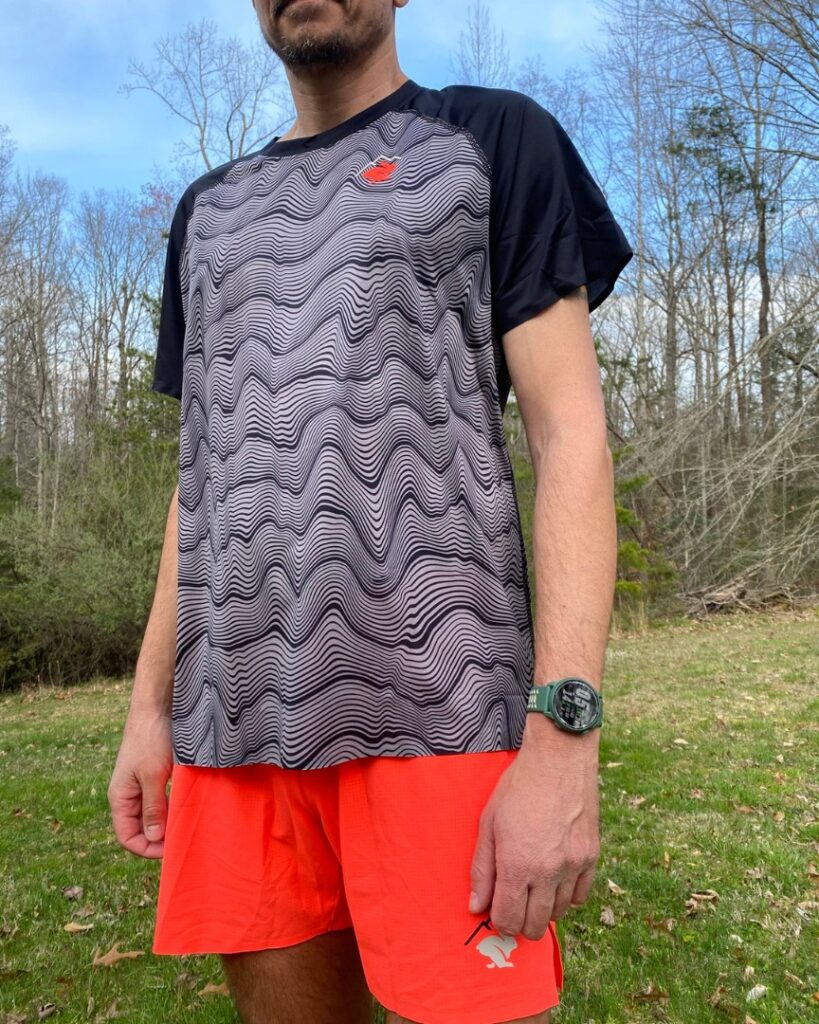
JOHN: The Switchback Tee is extremely lightweight. It utilizes Flatlock seams and bonded hems, which reduce irritation, while the microtextured inside ensures cling-free performance from peak to peak.
I love the design of this shirt. I feel like a lot of times, if you get a tech-heavy shirt, you lose out on style, but this manages to blend both well together.
My only concern with this shirt is if you get sweaty be careful taking it off. The material is so thin you can easily rip it Hulk-a-mania style.
MELISSA: I received the Switchback tank, which is Rabbit’s version of a race singlet. First impression: I love the colors and topography-like design. It’s cut and designed in a way that makes it a wonderful companion to a running vest or hydration pack. The material is slightly stiff with flat seams, which is great for breathability, moisture wicking, and prevention of bunching and clinging. For me, this tank might not be the most comfortable for everyday easy running — I prefer something less papery with a little more stretch. However, it excels for long hauls while wearing a hydration pack, running in the heat, and long races where you periodically douse yourself in water to cool off.
PRICE: $60-65
FINAL THOUGHTS ON THE RABBIT SPRING 2024 TRAIL COLLECTION
JOHN: I love all three of these pieces of gear, but my favorite is the shorts. The built-in pockets fit a crazy amount of stuff but don’t feel clunky or interfere with the run. If somehow Rabbit were to figure a way to have a bladder on the shorts for you to drink out of, it wouldn’t surprise me at all. The hoody is amazing. It’s great to run in to keep you cool and also protected from the sun but it’s also comfortable just using to hang out in. I really enjoyed the Switchback Tee. It’s crazy lightweight, vented, and breathable, but it did feel a little delicate.
I’m very impressed. I knew Rabbit was good but they’re better than advertised, and really cutting edge running gear. As I mentioned above, it’s hard to get running clothes that are both functional and fashionable, but Rabbit is able to do both. These are the best running clothes I’ve ever owned. I highly encourage anyone holding on to old running clothes to ditch them, treat yourself, and embrace Rabbit. Super underrated animal also!
MELISSA: The Spring 2024 trail collection is super functional, flattering, and has great flair. I have full confidence that any of these pieces would do nothing but help me on my way to a successful trail ultra. Well done, Rabbit.

Taste Behind Cultures: The Stories of Food and Tradition
Food is more than sustenance; it is the heart and soul of cultural identity. The stories of food and tradition, particularly in China, offer a profound insight into the richness of human heritage. This article delves into the captivating world of culinary traditions, showcasing the […]
Food & DrinkFood is more than sustenance; it is the heart and soul of cultural identity. The stories of food and tradition, particularly in China, offer a profound insight into the richness of human heritage. This article delves into the captivating world of culinary traditions, showcasing the vibrant tapestry of Chinese food culture.
The Global Tapestry of Culinary Traditions
Around the world, food is an intricate part of cultural identity. It is a reflection of geography, history, and the shared values of communities. Every culture boasts its own distinct culinary heritage, a legacy passed down through generations.
Culinary Traditions in China
China, with its vast expanse and diverse regions, is a treasure trove of culinary traditions. Each region offers a unique gastronomic experience, influenced by local produce and historical events. From the fiery flavors of Sichuan to the delicate dim sum of Guangdong, Chinese cuisine is a feast for the senses.
The Role of Ingredients
Local ingredients are the heart of Chinese cuisine. They not only provide the flavors but also symbolize cultural values. For instance, the humble soybean is the foundation of many Chinese dishes, representing the importance of humility and hard work.
Traditional Chinese Dishes
Chinese food is known for its iconic dishes, like Peking duck, Kung Pao chicken, and Mapo tofu. Each dish has a historical context, often rooted in ancient traditions. These dishes have evolved, but their essence remains, representing the history of a nation.
The Art of Preparing and Serving Food
Chinese dining is a ritualistic affair. The Chinese place great emphasis on etiquette and table manners. For instance, the practice of serving the eldest member of the family first is a sign of respect and hierarchy.
Food as a Symbol of Celebration
Chinese festivals are closely intertwined with food. Special dishes are prepared during these times, symbolizing luck, prosperity, and togetherness. Meals are often enjoyed with family and friends, emphasizing the communal aspect of Chinese culture.
Food as an Expression of Identity
Food plays a vital role in shaping individual and group identities in China. It’s not just about nourishment but about connecting with one’s roots. Chinese people take pride in their culinary traditions and often use food as a means of expressing their cultural identity.
Cultural Significance of Tea
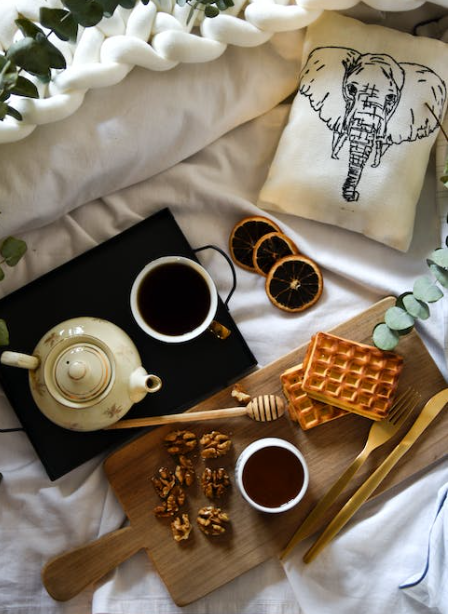
Tea has a rich history in China, dating back thousands of years. The art of tea preparation and the associated ceremonies are an integral part of Chinese culture. Tea symbolizes harmony, respect, and hospitality.
Influence on Global Cuisine
Chinese cuisine has left an indelible mark on the global culinary scene. Chinese restaurants can be found in every corner of the world. Dishes like sweet and sour chicken, spring rolls, and fried rice have become household favorites.
Challenges in Preserving Culinary Traditions
In a rapidly modernizing and globalizing world, preserving culinary traditions can be challenging. Traditional recipes and techniques are at risk of being lost. However, there are concerted efforts to safeguard this cultural heritage.
Adapting Traditions in a Modern World
Chinese cuisine has evolved to meet the demands of the modern world. Fusion cuisine, blending traditional flavors with contemporary twists, has gained popularity. Balancing tradition and innovation is a delicate dance.
Cultural Exchange Through Food
Food acts as a bridge between cultures. The global proliferation of Chinese restaurants and the popularity of Chinese dishes foster cultural exchange, promoting understanding and appreciation of Chinese culture.
The Power of Food Stories
Food is intertwined with stories and legends. From the mythical origins of dim sum to the legend of the Eight Immortals Crossing the Sea, Chinese cuisine is rich with narratives. These stories add depth and intrigue to the dining experience.

Conclusion
The culinary traditions of China are a testament to the enduring power of food in shaping cultural identity. From the heartwarming stories behind beloved dishes to the global influence of Chinese cuisine, food is more than sustenance; it is a reflection of a nation’s soul.
FAQs
- What are some must-try Chinese dishes for someone new to Chinese cuisine?
- How do regional variations in China’s culinary traditions impact the flavors of dishes?
- Can you explain the significance of tea in Chinese culture and daily life?
- What are the challenges in preserving ancient Chinese recipes in the modern age?
- How can individuals engage in cultural exchange through food in their own communities?

Picking the Perfect Men’s Insulated Jacket
Introduction:When it comes to staying warm and comfortable in cold weather, a well-chosen insulated jacket is a must-have for any man’s wardrobe. Whether you’re heading out for outdoor adventures or simply braving the winter chill, finding the perfect men’s insulated jacket can make all the […]
Home & Garden
Introduction:
When it comes to staying warm and comfortable in cold weather, a well-chosen insulated jacket is a must-have for any man’s wardrobe. Whether you’re heading out for outdoor adventures or simply braving the winter chill, finding the perfect men’s insulated jacket can make all the difference. In this blog post, we’ll guide you through the essential factors to consider when picking the ideal men’s insulated jacket, ensuring you stay warm, stylish, and protected in any cold-weather scenario.
- Insulation Type:
The type of insulation used in the jacket is a critical factor in determining its warmth and performance. There are two primary types of insulation to consider: a. Down Insulation: Down is known for its excellent warmth-to-weight ratio and compressibility. It is lightweight, highly insulating, and provides superior warmth even in extremely cold conditions. Look for jackets with high-quality down insulation, measured by fill power, to ensure optimal warmth and comfort. b. Synthetic Insulation: Synthetic insulation, such as polyester or PrimaLoft, offers reliable warmth even when wet. It is a great choice for damp or rainy environments, as it retains its insulation properties when exposed to moisture. Synthetic insulation is also more affordable than down and often hypoallergenic, making it suitable for those with down allergies.
Consider the climate and conditions you’ll be facing to determine the best insulation type for your needs.
- Warmth-to-Weight Ratio:
The warmth-to-weight ratio of the jacket is crucial, especially if you’re looking for a lightweight and packable option. It refers to the amount of warmth the jacket provides relative to its weight. Look for jackets that offer a high warmth-to-weight ratio, as they provide excellent insulation without adding unnecessary bulk. This is particularly important for outdoor activities where freedom of movement and layering are essential. - Weather Resistance:
A good insulated jacket should offer some level of weather resistance to protect you from wind, snow, and light rain. Look for jackets with a durable water repellent (DWR) coating on the outer shell, which helps repel moisture and keeps you dry. Additionally, consider jackets with a windproof construction or features such as adjustable cuffs, a cinchable hem, and a high collar to seal out cold drafts. - Breathability:
While insulation is crucial for warmth, a breathable jacket is equally important to prevent overheating and moisture build-up. Look for jackets with breathable materials or features such as underarm vents or mesh-lined pockets that allow excess heat and moisture to escape. This ensures comfort during high-intensity activities or when layering with other garments. - Fit and Mobility:
Choose an insulated jacket with a fit that allows for comfortable movement and layering. Consider your body shape, desired style, and intended use of the jacket. Some jackets offer a more relaxed fit, while others have a slim or athletic cut. Opt for a fit that allows for freedom of movement without excessive bulk. Look for features like articulated sleeves or stretch panels that enhance mobility, particularly in active outdoor pursuits. - Style and Versatility:
Beyond functionality, consider the style and versatility of the jacket. Look for a design that aligns with your personal taste and can seamlessly transition between outdoor activities and everyday wear. Neutral colors and classic designs are often more versatile, allowing for easy coordination with different outfits. Additionally, consider features like removable hoods or adjustable elements that offer flexibility and adaptability to various weather conditions. - Quality and Durability:
Investing in a high-quality insulated jacket ensures longevity and reliable performance. Research reputable brands known for their durable materials, superior craftsmanship, and attention to detail. Check for reinforced stitching, quality zippers, and durable fabrics that can withstand regular wear and tear. Choosing a well-constructed jacket will ensure it remains a staple in your wardrobe for years to come. - Reviews and Recommendations:
Before making a final decision, read customer reviews and seek recommendations from others who have purchased the jacket you’re considering. Real-life experiences and feedback can provide valuable insights into the jacket’s performance, comfort, and durability. Additionally, consider any warranty or return policies offered by the brand to ensure your satisfaction with the purchase.
Conclusion:
Picking the perfect men’s insulated jacket involves considering insulation type, warmth-to-weight ratio, weather resistance, breathability, fit and mobility, style and versatility, quality and durability, as well as reviews and recommendations. By evaluating these factors and aligning them with your specific needs, you can find an insulated jacket that keeps you warm, protected, and stylish in any cold-weather situation. Invest in a reliable jacket that will become your go-to companion for outdoor adventures or simply navigating chilly urban landscapes with comfort and confidence.
The Rich Aroma of Innovation: Nespresso Coffee
Welcome to the world of Nespresso, where every sip is a journey through the finest coffee regions and a testament to innovation in your cup. A Heritage of Quality Nespresso began its journey with a simple yet revolutionary idea: to create the perfect cup of […]
Home & Garden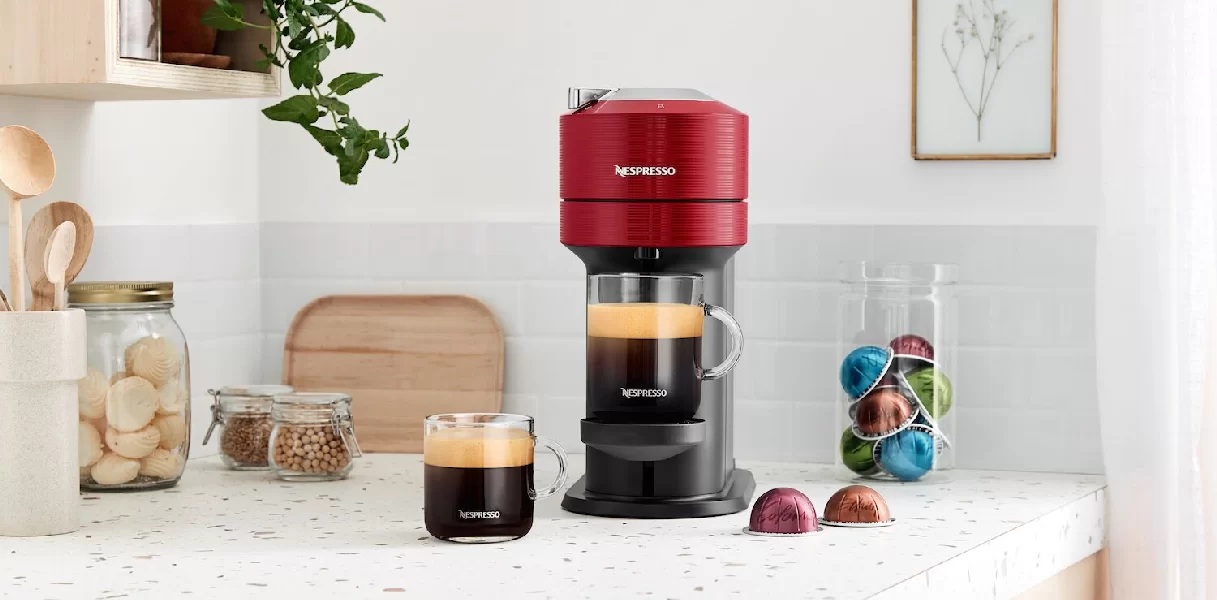
Welcome to the world of Nespresso, where every sip is a journey through the finest coffee regions and a testament to innovation in your cup.
A Heritage of Quality
Nespresso began its journey with a simple yet revolutionary idea: to create the perfect cup of espresso coffee with exquisite crema, tantalizing aroma, and full-bodied taste – just like skilled baristas. As a pioneer in the coffee industry, Nespresso has redefined the way millions of people enjoy their espresso coffee. It has established a standard of quality that is unmatched in the industry.
Sustainability at Heart
Nespresso’s commitment to sustainability is evident in its AAA Sustainable Quality™ Program. This initiative ensures that 80% of their coffee is sustainably sourced, supporting farmers and the environment. The brand’s dedication to eco-friendly practices extends to its capsules, which are fully recyclable, preserving the freshness of the coffee and the health of the planet.
The Nespresso Capsule: A Symphony of Flavors
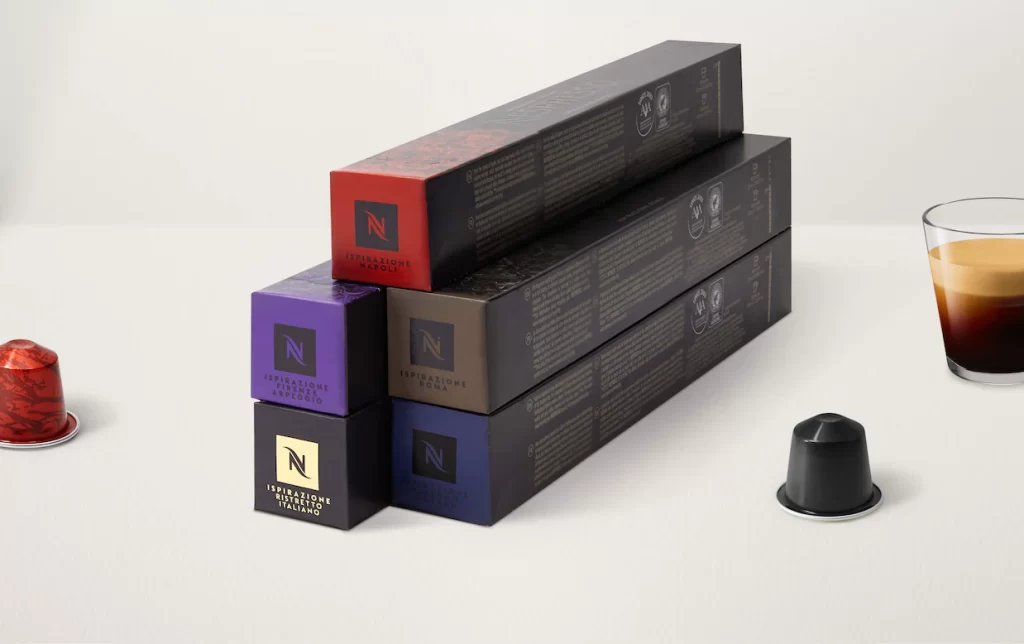
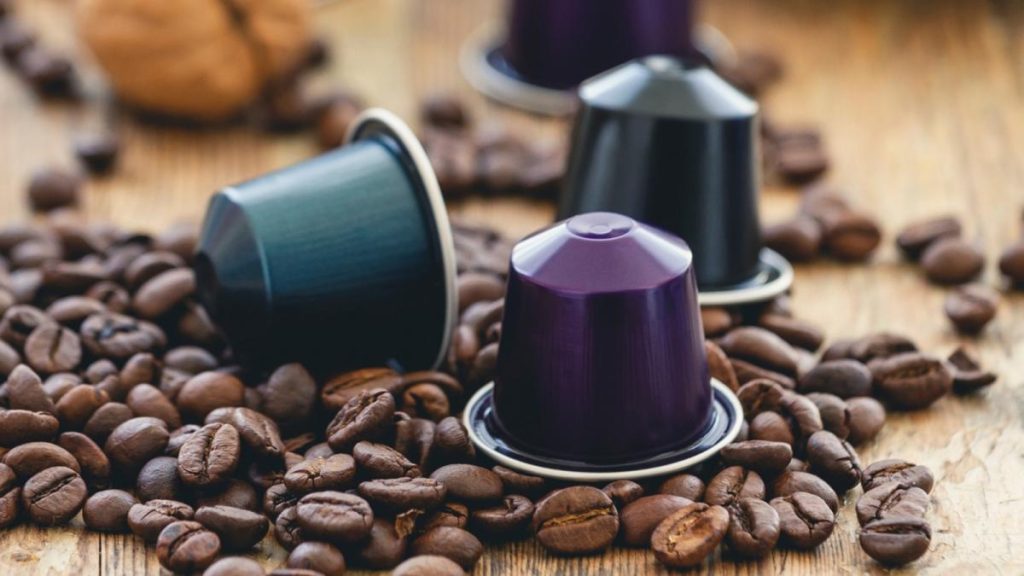
At the heart of Nespresso’s innovation is the capsule system, a masterpiece of design that preserves the coffee’s freshness and flavors. The Nespresso OriginalLine capsules, like the Arpeggio Intenso, offer a rich and creamy taste with an intensity level of 9, made from the finest Arabicas from South and Central America. For those seeking variety, Nespresso’s range includes decaffeinated options and limited editions, ensuring there’s a capsule for every taste and occasion.
The Nespresso Machines: Art Meets Technology
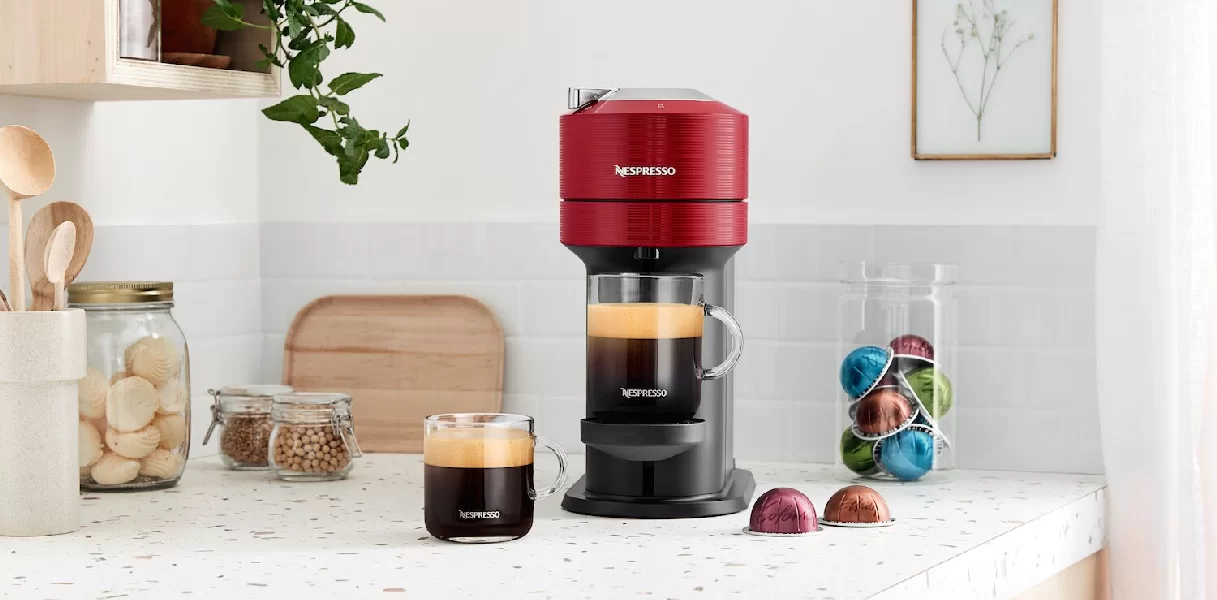
Nespresso machines, such as the Nespresso Vertuo, are where art meets technology. With Centrifusion™ technology, each capsule spins up to 7,000 rotations per minute, blending ground coffee with water and producing the perfect crema to complement your favorite coffee blend. Whether you prefer a small, strong espresso or a large, mild coffee, Nespresso machines offer a seamless and customizable brewing experience.
Join the Nespresso Club
As a Nespresso Club member, you’ll enjoy benefits like personalized services, early access to new products, and exclusive offers. It’s a community of coffee enthusiasts who appreciate the finer things in life and share a passion for the ultimate coffee experience.
Experience Nespresso Today
Why wait for a special occasion to indulge in the luxury of Nespresso? Visit your nearest Nespresso boutique or explore our range online. Choose your machine, select your capsules, and become part of a community that celebrates the art of coffee. And remember, with Nespresso, you’re not just buying coffee; you’re investing in a sustainable future for coffee lovers around the world.
Embrace the Nespresso lifestyle today and elevate your coffee experience to extraordinary.

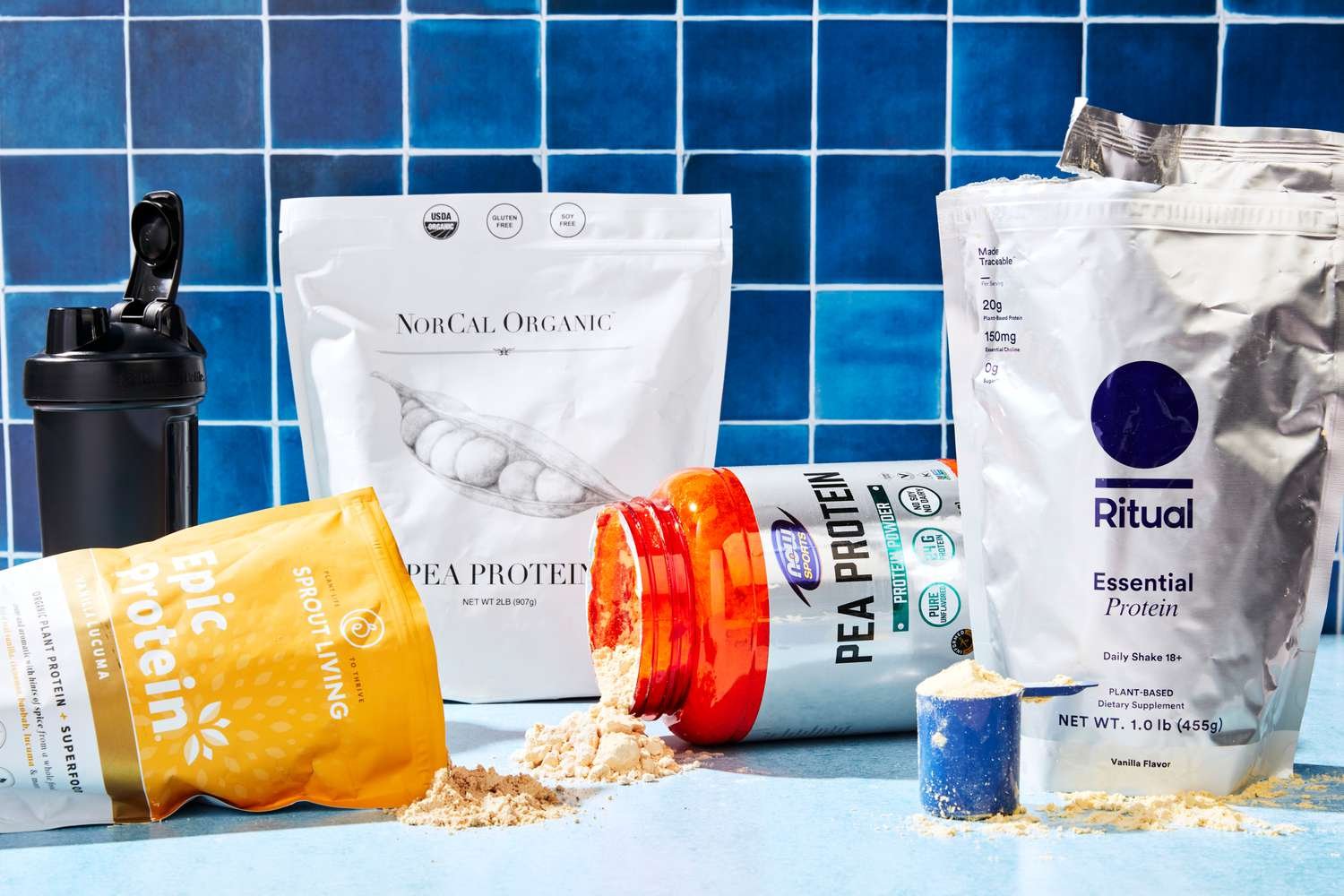
The Best Plant Based Protein Powders For Runners & Endurance Athletes
These are the best plant based protein powders for athletes, all of which are vegan protein powders and made from high-quality ingredients – many are also certified organic. Our vegan protein powder buyer’s guide also includes tips for how and when to use plant-based protein powder for […]
Nutrition